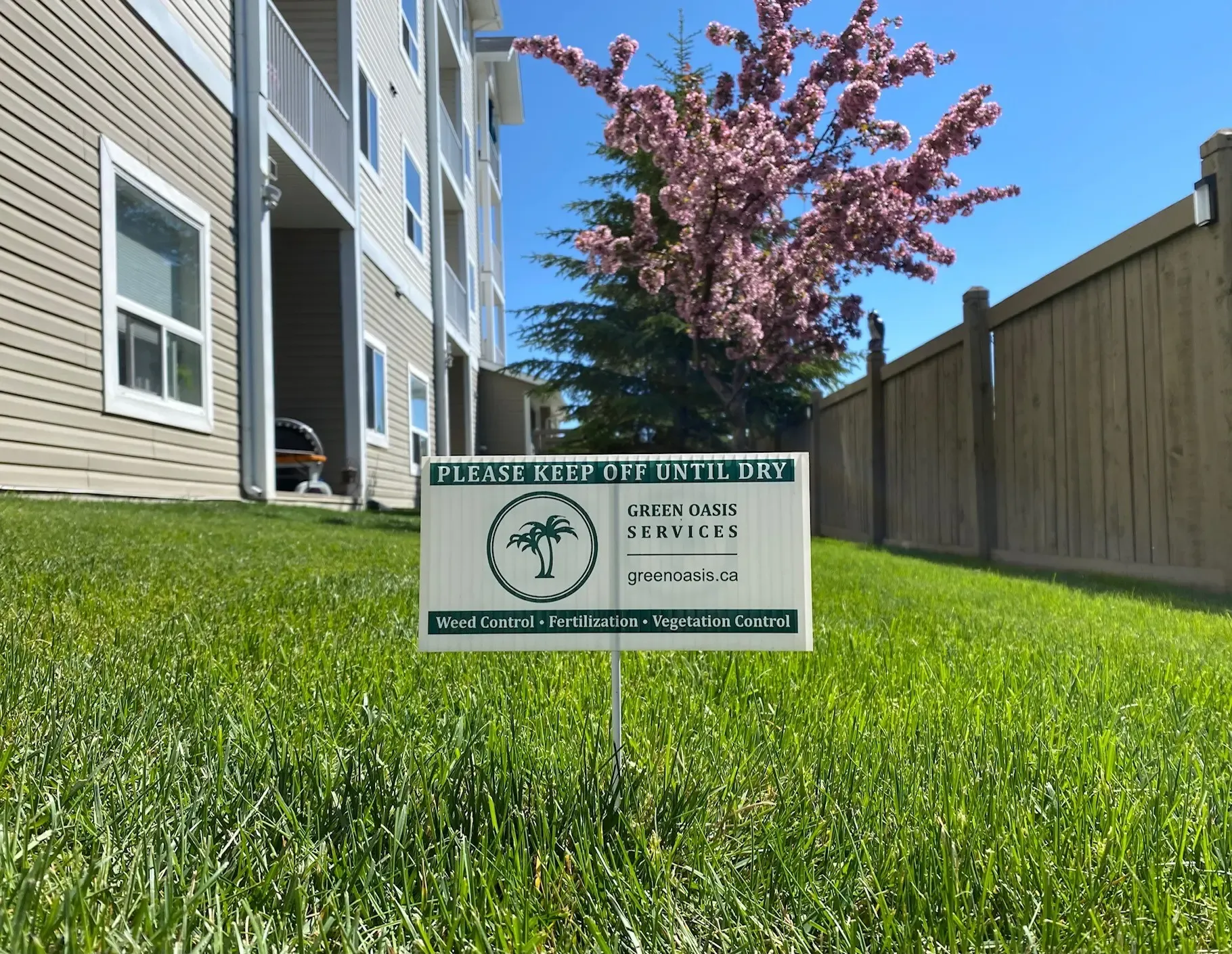
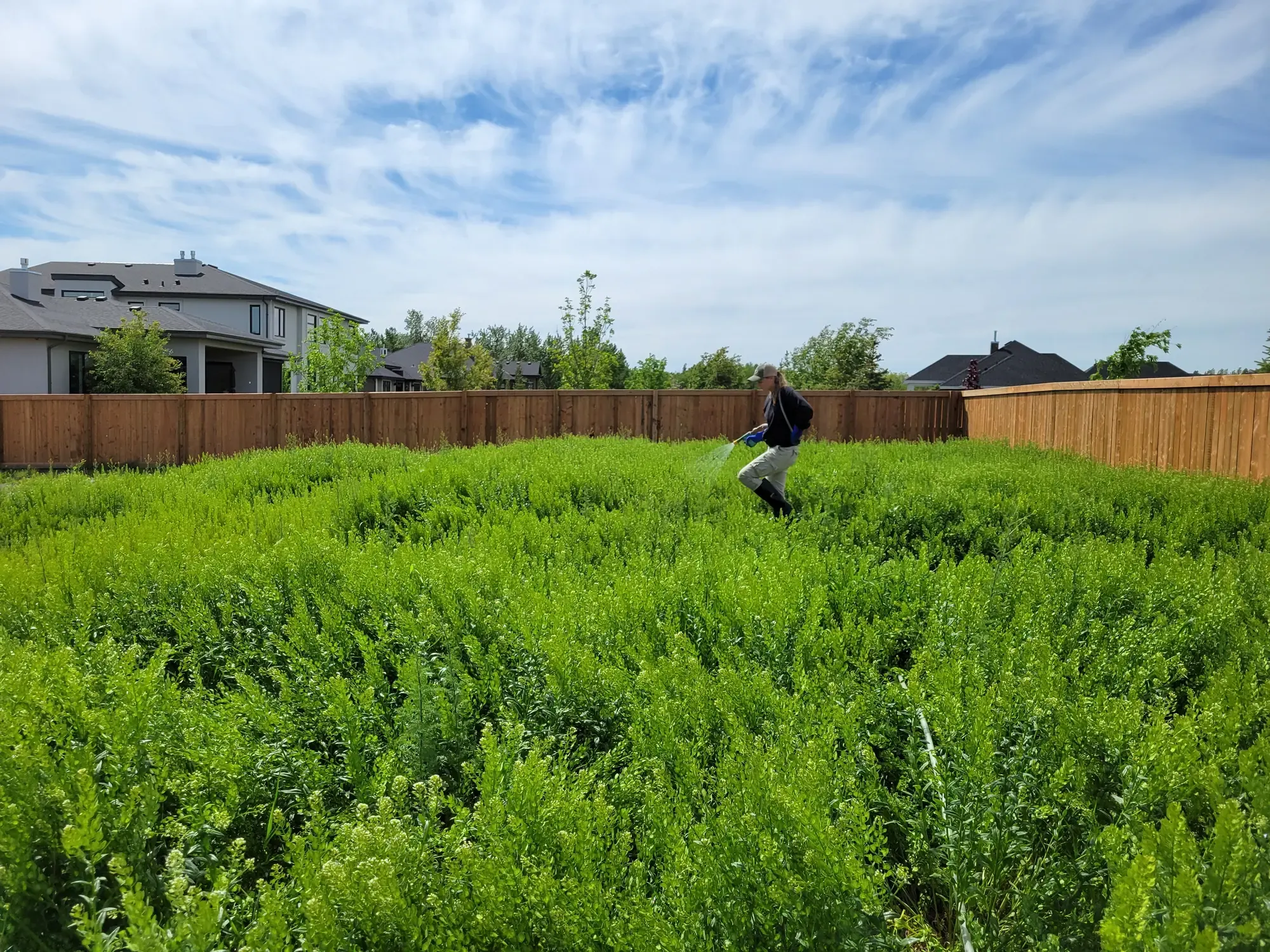
Every Edmonton homeowner knows the frustration. You spend a Saturday afternoon pulling dandelions by hand, filling an entire yard bag, and feeling satisfied with a job well done. By Wednesday, the yellow heads are already poking back through the turf. The problem isn't your effort. The problem is that pulling weeds only removes the visible growth while leaving the root system intact and ready to regenerate. Effective weed control requires a different approach entirely, one built around timing, targeted products, and a long-term strategy that addresses why weeds are thriving in the first place.
Understanding Weed Growth in Edmonton
Edmonton's growing season is short but intense. From mid-May through mid-September, long daylight hours and warm temperatures create ideal conditions for plant growth, and weeds are exceptionally good at exploiting these conditions. They have evolved to germinate quickly, establish deep root systems, and reproduce aggressively within a compressed timeframe.
The most common culprits in Edmonton lawns are dandelions, which are by far the most prevalent broadleaf weed in the region. But they're not alone. White clover spreads through stolons and forms dense mats that smother grass. Broadleaf plantain anchors itself with a deep taproot and thrives in compacted soil. Canada thistle sends lateral roots up to six metres in a single season. Chickweed colonizes thin or bare spots in spring before grass has a chance to fill in. Creeping charlie (ground ivy) is one of the most tenacious invaders, spreading by both seed and runner and tolerating shade that weakens grass.
All of these weeds compete directly with your grass for water, nutrients, and sunlight. In a weakened lawn, they win that competition easily. In a healthy, thick lawn, the grass itself becomes the primary line of defence.
Why Store-Bought Products Fall Short
Walk into any hardware store in spring and you'll find an entire aisle of weed-and-feed products, spot sprays, and granular herbicides. They promise easy results, but there are several reasons why consumer-grade products consistently underperform compared to professional applications.
First, concentration matters. Consumer products are formulated at lower active ingredient levels than professional-grade herbicides. This is partly a safety consideration for untrained applicators, but it also means the product is less effective, especially against established weeds with deep root systems. Second, application method matters. A handheld pump sprayer or broadcast spreader doesn't deliver the same uniform coverage as calibrated professional equipment. Uneven application means some weeds get a lethal dose while others receive just enough to yellow temporarily before recovering.
Timing is perhaps the biggest factor. Applying herbicide at the wrong growth stage wastes product and delays results. A dandelion sprayed when it is already in seed has already reproduced. A thistle treated too early in spring, before it has enough leaf surface to absorb the product, will shrug off the application. Professional applicators know the optimal windows for each target weed.
It's also worth noting that Alberta doesn't have a cosmetic pesticide ban like Ontario or Quebec. This means professional-grade selective herbicides are available here, giving licensed applicators access to more effective products than what's on retail shelves.
How Professional Weed Control Works
A professional weed control program begins with an assessment of your lawn. The technician identifies the weed species present, evaluates the overall health of the turf, and determines the most effective treatment approach. This isn't a one-size-fits-all spray. Different weed species respond to different active ingredients, and the condition of your lawn determines how aggressively weeds can be targeted without stressing the grass.
The treatment itself uses selective herbicides, products engineered to target broadleaf weeds while leaving grass unharmed. The herbicide is absorbed through the weed's leaves and transported to the root system, killing the entire plant rather than just the visible growth. Liquid application is the preferred method because it provides more consistent, even coverage than granular products and adheres to leaf surfaces more effectively.
A single application won't eliminate all weeds for the entire season. Weeds germinate at different times throughout spring and summer, and seeds lying dormant in the soil can produce new growth weeks after a treatment. This is why professional programs include multiple applications, typically three to four visits spaced throughout the growing season. Each visit targets the current flush of weed growth and prevents new populations from establishing.
The Importance of Timing
In Edmonton, the weed control calendar follows a clear rhythm. Spring treatments in May and early June target the first wave of emerging weeds, dandelions and clover primarily, before they have a chance to flower and spread seed. This early intervention dramatically reduces the total weed population for the rest of the season.
Summer treatments in July catch the mid-season germination of species like thistle, chickweed, and creeping charlie that establish later in the growing season. Skipping this window allows these weeds to mature and become much harder to control.
Fall is arguably the most critical treatment window, and the one most homeowners overlook. In September and early October, perennial weeds are actively pulling nutrients and carbohydrates down to their root systems to prepare for winter dormancy. When herbicide is applied during this period, it travels with those nutrients directly into the root, delivering a far more complete kill than any other time of year. A fall treatment can eliminate weeds that survived spring and summer applications, and it sets the stage for a dramatically cleaner lawn the following spring.
Building a Weed-Resistant Lawn
The most effective weed control strategy isn't just about killing weeds. It's about building a lawn that resists them in the first place. Thick, healthy grass is the best weed prevention available, because it leaves no room for weed seeds to reach the soil and germinate.
This requires a holistic approach. Regular fertilization feeds the grass so it grows thick and vigorous. Core aeration relieves soil compaction so roots can grow deeper and absorb more water and nutrients. Proper mowing practices matter more than most people realize: keeping your grass tall, around three inches, shades the soil surface and prevents weed seeds from getting the sunlight they need to germinate. Watering deeply but infrequently encourages deep root growth in your grass while discouraging shallow-rooted weeds.
When you combine these cultural practices with a properly timed weed control program, the results compound over time. Each season, the grass gets stronger, the weed population gets smaller, and the lawn requires less intervention to stay clean. By the second or third year of a consistent program, most lawns see a dramatic reduction in weed pressure.
The Bottom Line
Professional weed control isn't just about spraying chemicals on your lawn. It's a timed, targeted program built around your property's specific needs and Edmonton's growing season. The combination of professional-grade products, calibrated equipment, proper timing, and multiple touchpoints throughout the season delivers results that consumer products and weekend pulling simply cannot match. If weeds have been a persistent frustration, a structured program is the path to a cleaner, healthier lawn that improves year over year.