
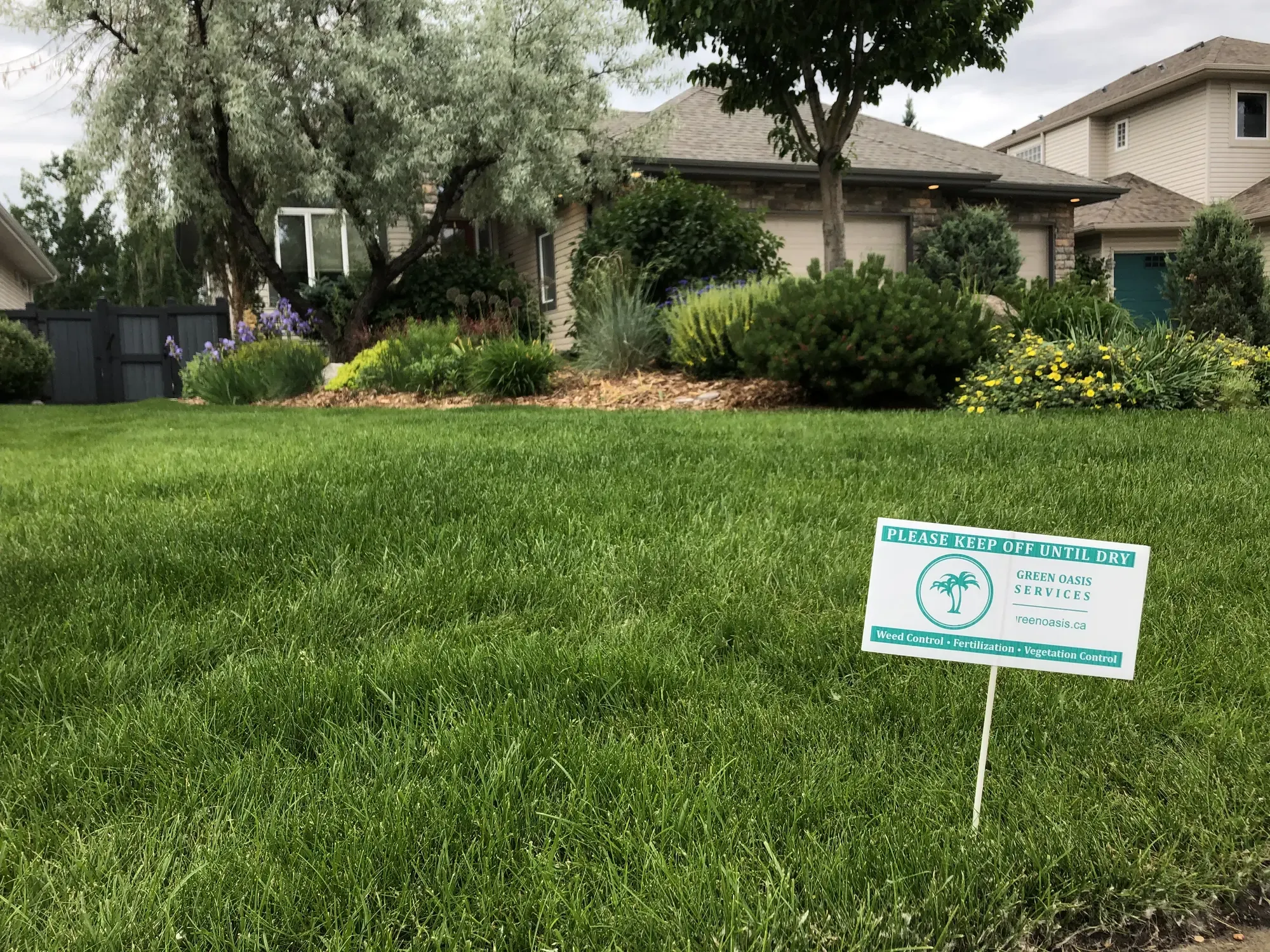
The moment the snow finally clears from your lawn is one of those annual revelations. Not always a pleasant one. After six months under ice and snow, Edmonton lawns tend to emerge looking rough: matted, discoloured, and possibly patchy in spots you don't remember being patchy. The good news is that most of what you're seeing is recoverable. A few well-timed steps in spring can set your lawn up for its best season yet. The key word is timed. Doing things at the wrong point in spring either wastes money or actively makes things worse. This guide walks through exactly what to do and, more importantly, when.
Start With an Honest Assessment
When snow clears (typically late April in Edmonton, though it varies considerably year to year), resist the urge to immediately start working on your lawn. The ground is often still partially frozen, and heavy foot traffic or equipment on saturated soil can damage the turf structure before it has a chance to recover. Give it a week or two to firm up and let the excess moisture drain.
During that waiting period, take a careful look at what you're dealing with.
Snow mold. Look for circular grey or pink patches where grass appears matted and discoloured. Snow mold is a fungal disease that develops under prolonged snow cover, particularly in spots where snow sat the longest. The grey variety (Typhula blight) is more common in Edmonton and generally resolves on its own once the lawn dries out and temperatures warm. Light raking to break up the matted areas speeds recovery by improving air circulation around the turf.
Vole damage. After a winter with consistent snow cover, you may notice winding trails of chewed, flattened grass running through the lawn. These are vole runways created by small rodents foraging under the snow all winter. The grass itself is usually still alive at the root level, and the damaged areas will fill back in through the season with proper fertilization.
Bare spots and thinning. Areas that were already weak going into winter often come out worse. Make note of these spots. They will benefit most from early fertilization and may need overseeding in late May once soil temperatures are reliably warm.
Once the ground has firmed up enough to walk on without sinking, rake out any debris, leftover leaves, winter sand, and dead material that accumulated over winter. This simple step improves airflow at the turf surface and removes the conditions that can extend snow mold or encourage other fungal issues.
Why April Is Usually Too Early to Fertilize
This is the most common mistake Edmonton homeowners make in spring. The motivation is completely understandable. The snow is gone, the lawn looks rough, and every instinct says to get fertilizer down immediately. The problem is that grass roots cannot efficiently absorb nutrients until soil temperatures reach a consistent 10°C.
In Edmonton, soil at the 5 cm depth typically reaches that threshold somewhere between late April and mid-May, depending on the year. Applying fertilizer before that point means the nutrients largely wash away with runoff during the remaining freeze-thaw cycles, doing nothing for your lawn and sending those nutrients into the storm drain system instead.
The right trigger is not a date on the calendar. Watch for these signals instead: the lawn has been snow-free for at least two to three weeks, daytime temperatures are consistently in the 10 to 15°C range, the grass is showing visible new growth, and the ground is firm enough to walk on without your feet compressing the turf. When those conditions align, you are in the window. In a typical Edmonton spring, that falls in the first two weeks of May, though a warm year can pull it forward.
The First Fertilizer Application of the Season
Once the soil is ready, the first application is the most important one of the year. After several months of dormancy, grass is drawing on depleted nutrient reserves. A well-timed spring feed gives it the energy to establish a thick, vigorous root system before the heat and dry spells of July and August arrive.
For the first spring application, a higher-nitrogen formulation drives the green-up and dense growth you want coming out of dormancy. Professional-grade liquid fertilizer is absorbed more efficiently than granular at this point in the season, because granular products need sufficient heat and consistent moisture to break down properly. Those conditions are still inconsistent in early May on the prairies.
One thing worth avoiding for the first application: products marketed as weed-and-feed combinations. The timing required for the herbicide component to be effective is different from optimal fertilizer timing, and compromising one for the other produces mediocre results on both fronts. A dedicated fertilizer application now and a separate weed control treatment a week or two later, once weeds have enough leaf surface to absorb the product, is the more effective approach.
Weed Control: The Window You Don't Want to Miss
By the time you are seeing bright yellow dandelions scattered across your lawn in May, the best early-season treatment window is already starting to close. The ideal time to target dandelions and other broadleaf weeds is when they are actively growing but before they have flowered and set seed.
In Edmonton, dandelion leaves typically begin emerging in April as temperatures warm, with mass flowering starting in early to mid-May. Professional weed control programs aim for that pre-flower window because it maximizes the herbicide's ability to travel down through the plant to the root system, killing the entire weed rather than just the surface growth. It also prevents the first major seeding event of the year, which can spread tens of thousands of seeds across your property and your neighbours'.
A single spring treatment won't handle everything for the full season. Weeds germinate at staggered intervals through spring and summer, so a thorough program includes three to four treatments timed to each wave of new growth. But the early spring application, timed before flowering, sets the trajectory for the whole year. It is also worth noting that Alberta does not have a cosmetic pesticide ban like Ontario or Quebec, which means licensed professionals here have access to more effective selective herbicides than what is available on retail shelves.
Fall is arguably the most underrated treatment window of all, but that is a conversation for a separate article. In spring, the priority is getting ahead of that first flush while dandelions and other perennial broadleafs are in active vegetative growth.
Aeration in Spring: The Honest Answer for Edmonton Soils
Edmonton sits on some of the heaviest clay soil in the country. Clay compacts under weight and repeated freeze-thaw pressure, and after a full Alberta winter, even lawns that were in good shape going in can emerge with significant compaction that limits water infiltration, air movement, and root depth.
The honest answer on spring versus fall aeration for Edmonton lawns is that fall is generally the better window. Aerating in mid-September allows grass to recover during a period of strong root growth and cooler temperatures, without the stress of an upcoming summer. Fall aeration also pairs well with overseeding, as the freshly opened soil channels provide excellent seed-to-soil contact.
That said, spring aeration is absolutely viable, particularly if the lawn is visibly struggling with water retention or if compaction is severe. The timing requirement is specific: the soil must be fully thawed to at least 8 to 10 cm depth, firm enough to support equipment without tearing up the turf, and at the right moisture level. Aerating saturated ground just creates a mess and can damage the turf structure. In a typical Edmonton spring, the window for safe aeration opens around late April to early May. If you missed fall last year and your lawn is showing signs of compaction, a spring aeration is worth doing. If you are choosing between the two for this year, schedule fall.
Month-by-Month: Spring Reference for Edmonton
Early to mid-April. Snow is clearing or recently cleared. Focus on visual assessment. Rake matted snow mold patches lightly to improve airflow. Remove debris, winter sand, and dead material. Keep foot traffic to a minimum while the ground is still soft.
Late April. Ground is starting to firm up. Watch soil temperature and signs of active grass growth. Dandelion leaves are beginning to emerge in sheltered areas. This is the monitoring window, not the action window yet for most lawns.
Early to mid-May. The primary action window for most Edmonton properties. Soil temperatures are approaching or hitting 10°C, grass is showing consistent new growth, and the lawn is firm enough for equipment. First fertilizer application and first weed control treatment both fit here. Spring aeration, if you are doing it this season, belongs in this window as well.
Late May into June. Follow-up assessment. Bare spots that need overseeding should be addressed before the summer heat arrives. The first major dandelion flush has occurred or is in progress, making a second weed control pass timely. Continue with the established fertilization schedule through the season.
The Pattern That Holds Most Lawns Back
The most common pattern we see is homeowners doing too much too early, or doing the right things in the wrong sequence. Fertilizing in early April when the ground is still cycling through freeze and thaw, aerating when the soil is still saturated, applying weed control before weeds have developed enough leaf surface to absorb it: all of these lead to wasted effort and wasted money.
Edmonton's spring is unpredictable. Some years the snow is gone by early April and soil temperatures climb quickly. Other years a late snowfall in early May pushes everything back by two weeks. The calendar matters less than the actual conditions in your yard. When the ground is firm, the soil is warming, and the grass is actively growing, you are in the window. Until those signals align, patience tends to produce better outcomes than action.
A professional lawn care program removes the guesswork from this equation. Technicians monitor soil temperature data, track weed emergence timing, and schedule applications based on what is actually happening in the ground rather than a fixed date on a schedule. For Edmonton homeowners who want consistent results without spending their spring weekends troubleshooting, that kind of systematic approach is what separates a lawn that improves year over year from one that is always catching up.